Tuesday, May 31, 2016

Thoughts from Balticon 50!

Balticon 50 was the largest gathering of nerds I have ever been a part of. I saw people dressed up as Boba Fett, Daenerys Targaryen, Dr. Strange, Hodor, a Jedi Knight, Dr. Who, Arya, Princess Leia, and someone dressed up as a demon, with face and arms painted red, horns out of the forehead, and carrying a huge club that had fake metal spikes and a ridiculous tongue coming out the middle of it, like it was smiling (not sure if the demon was from a computer game or anime series or anything at all), and lots of other cool costumes. They were all awesome. Some dude was walking around as the Winter Soldier and if the guy had admitted he was really Sebastian Stan in real life I wouldn't have been surprised. Here's the one picture (below) I snapped of some cosplayers. They were really nice, from Washington state, and I later saw a picture of the same guy at the convention photo booth. He was wearing a different costume. I think he brought one for every day of the event. Again, I shamefully admit I am not sure what they are referencing:


The photo was snapped during the only major hiccup I experienced at the convention. On Friday evening the fog machine for one of the presentations sounded the fire alarm and the entire hotel had to evacuate:

This photo doesn't do the crowd justice. It was packed outside with people. Thankfully, there was no fire and we proceeded back in.

Balticon is the Baltimore Science Fiction Society's annual science fiction and fantasy convention. It was the 50th anniversary of the event and they landed the big guy, George R.R. Martin, as their guest of honor. (I saw at least three people dress up like him too, with costumes so good I had to stop and look them over for a second or two to confirm they weren't him.) There were also loads of other people there too. On Saturday morning my friend and I got into an elevator and Connie Willis walked in to ride up with us. She's the award-winning author of the novels Blackout and All Clear and is the most decorated science fiction author ever. Her books are awesome and I was just about to tell her I thought so when the bell dinged and we were getting off and going our separate ways. We were in that little box for about twenty seconds but I never said anything. I'll get a word in next time, but it exemplified to me that this would be a random and fun event.

GRRM spoke for an hour on Saturday. He was interviewed by some guy I had never heard of (he's the one on the left of the picture for those who have no idea what George looks like). Julia and I caught most of it, which didn't concern itself much with A Song of Fire and Ice. He did explain his thought process as his novel A Game of Thrones ballooned into the epic fantasy series that it has become today. He also talked about the Vietnam War, New Jersey, and comics books. He is very well spoken and entertaining. Sadly he didn't comment on the current state of The Winds of Winter. I did hear that on Sunday he read a new chapter from the Greyjoy POV.

I apologize for the terrible quality of this photograph. Clearly, I am not good at taking pictures.


The rest of the time I was sitting in seminars, watching panels, and meeting really nice people. I learned a lot about writing science fiction and fantasy. Sarah Pinkser, in particular, was phenomenal. She's a local Baltimore resident (like myself) and winner of this year's Nebula for Best Novelette, called Our Lady of the Open Road. She gave a wonderful workshop on prepping stories for publication and she gave great input and advice about the craft. Congratulations Sarah!

All in all it was a successful Balticon, in addition to my sister visiting for the weekend, which was a blast!

Friday, March 25, 2016

The 'Seed and Soil' Hypothesis: When Scientists from the 19th-Century were Ballers and Shot-Callers

Think of London in the late 1880's and you might think of Jack the Ripper, or Queen Victoria, or the establishment of the first competitive league of football. But what would probably not be on your list is Stephen Paget, surgeon at the West London Hospital and Metropolitan Hospital in London. In late 1888, while Scotland Yard was investigating the gruesome murders in White Chapel, Mr. Paget was busy putting together a research article that would be published in The Lancet, just over 127-years ago, on March 23rd, 1889. Mr. Paget's paper, The Distribution of Secondary Growths in Cancer of the Breast, is a short, two-page article exploring metastatic tumors in cancer patients. The opening reads:

"An attempt is made in this paper to consider "metastasis" in malignant disease, and to show that the distribution of the secondary growths is not a matter of chance."

Mr. Paget observed that in women diagnosed and killed by breast cancer, a high proportion of secondary tumor sites were found in the liver and in a few other organs and tissues. He wrote:

"Then as regards "metastasis." Here, too, we shall find evidence of predisposition; we shall see that one remote organ is more prone to be the seat of secondary growth than another. In cases of cancer of the breast, it is strange how often the liver is the seat of secondary cancer.....This frequency of secondary disease of the liver is of course a familiar fact; but it acquires fresh interest when we contract it with the immunity enjoyed by other organs. The spleen has, so to speak, the same chances as the liver; its artery is even larger than the hepatic artery; it cannot avoid embolism. Yet the liver was the seat of 276 cases; the spleen in 18 only. Such a great disproportion cannot be due to chance."

What Mr. Paget observed was that some organs and tissues preferentially developed secondary metastatic tumors and this was dependent upon the tissue of origin of the primary tumor, in this case the breast. Concluding his article he wrote:

"All reasoning from statistics is liable to many errors. But the analogy from other diseases seems to support what these records have suggested. The eruptions of the specific fevers and of syphilis, the inflammations after typhoid, the lesions of tuberculosis, all show the dependence of the seed upon the soil. The best work in the pathology of cancer is now done by those who, like Mr. Ballance and Mr. Shattock, are studying the nature of the seed. They are like the scientific botanists; and he who turns over the records of cases of cancer is only a ploughman, but his observation of the properties of the soil may also be useful."

His words are compelling and quite prophetic, as we'll explore in a moment. The 'seeds' he talks about refer of course to cancer cells, which had already been identified back in 1845. Decades earlier, German scientist Rudolf Virchow first proposed the idea that cancers and cancer cells are abnormal versions of normal cells. Virchow was one of the first scientists to observe cancers of the blood and named these blood cancers leukemia. (As a side note, I find it interesting that Virchow did not believe in Darwinian evolution, which happens to also play a fundamental role in cancer progression and is commonly known as micro-evolution - but that's a topic for another day.)

What Paget brings to light for the first time in his paper is his reference to the 'soil', or the environment in which a metastatic cancer cell finds itself in after separating from the primary tumor and riding the circulatory or lymphatic systems towards another tissue. Each of our organs needs specific nutrients, hormones, metabolites, and signaling molecules to function properly. The local tissue and cellular environment of the brain will have a different chemical make up than that of the liver, or lungs, or bladder (some factors do remain common). Paget hypothesized that these tissue- and organ-specific environments can either stimulate or inhibit metastatic cancer cells growing into secondary tumors. Paget's theory would become known as the 'seed and soil' hypothesis.

Paget had both his supporters and detractors when he published his paper, as is often the case in science. Unfortunately the nature of what cancer is, how it initiates and progresses, and how to treat it, was still completely unknown at the turn of the 20th century after his paper had been published. Like Einstein's theory of gravity waves, the knowledge didn't exist to empirically test his prediction.
But in the last 30 years, the onset of molecular biology finally began to explore and reconsider Paget's hypothesis. The 'soil' he mentions is now referred to as the tumor micro-environment, and it plays an essential role in secondary tumor growth. How and why specific tumors relocate and metastasis to specific organs is still on ongoing discussion. Last November, a team researchers from the University of Texas and elsewhere shined a spotlight on this question when they published their recent work in Nature. Their paper, Microenvironment-induced PTEN loss by exosomal microRNA primes brain metastasis outgrowth, finally confirms Paget's predictions definitively.

To make a long (but elegant) story short, Zhang and colleagues proved that when cancer cells from primary breast tumors metastasize to the brain, the micro-environment in the brain is fertile soil for breast cancer cells to grow into secondary tumors. Their experiments demonstrate that astrocytes, a type of cell abundant in everyone's brain, can signal to the freshly-deposited metastatic cancer cell and promote its growth, division, and subsequent tumor formation. It's definitive proof that the 'soil' influences the 'seed' in metastatic cancer and that this phenomena occurs specifically in the brain (for specific cancers originating from the breast). Simply put, astrocytes make little packages (called exosomes) that contain signaling molecules and proteins that are delivered out of the astrocyte, into the micro-environment of the brain, and picked up by the invading cancer cell. Once the cancer cell opens these packages, the content inside promotes the growth of the cell into a new tumor.

The results are challenging and thought-provoking, as most significant scientific breakthroughs tend to be, because the mechanism proven in this paper implicates normal, healthy brain cells as essential players in the development of metastatic tumors. Unfortunately, this means that not only do cancer cells arise as mutated offspring of our own normal cells, but our own normal cells can also promote the growth of metastatic tumors in specific organs. (This was already proven for primary tumors. Scientists have previously shown that tumors and tumor cells recruit the help of local cells in the surrounding micro-environment of the primary tumor to promote its own growth. So the 'seed and soil' hypothesis is also an important paradigm in this respect.)

The good news is that this work details new mechanisms of tumor growth that could serve as targets for drug therapy and personalized medicine. I won't go into detail, but this paper identifies specific molecular factors involved in this signaling process that could also be therapeutic targets. It's a well-executed research story that draws on both historical and contemporary scientific work and theory. The researchers concluded their study (and pay homage to Mr. Paget) by saying:

"Beyond a tumour cell autonomous view of metastasis, our findings highlighted an important plastic and tissue-dependent nature of metastatic tumour cells, and a bi-directional co-evolutionary view of  the 'seed and soil' hypothesis." 

Now I want to take a step back for one moment to discuss scientific theory, evidence evaluation, and prediction in a more fundamental sense. Above we have two examples of researchers who made an observation, gathered evidence, and made a prediction based upon those observations and results. Incredibly, 127 years ago was not too early to predict something like the tumor micro-environment. Paget did this without the use of molecular biology or even the knowledge of the existence of genes (Gregor Mendel's work on genetics and inheritance wouldn't be re-discovered until the early 1900's). Many scientific contemporaries of Paget's were making predictions that would end up being validated once new technology was developed to address those predictions. I wrote a previous post about the recent confirmation of gravity waves, a theory put forth by Einstein nearly a 100 years ago! The fact that the echoes of these individuals can be heard a century later is remarkable. However, what is more important is that this is evidence that the scientific method of evidence gathering and hypothesis generation is a bonafide, tried-and-true methodology. It is the backbone of nearly all scientific progress and most of technology development.

It is also why it's so frustrating to me that people choose to be selective about the science they believe in or consider accurate. It's deeply concerning that politicians and individuals can choose to believe in the latest cancer medication or weapon technology, yet are staunch climate-change deniers or don't believe in the efficacy or power of vaccines (spoiler alert: the HPV vaccine works, is safe. and is drastically reducing HPV prevalence in teenage women). For each of this issues, it is the same scientific method that tested all the science and technology we have available to us. Picking and choosing what we want to believe can be a dangerous precedent when it comes to science and more scientists need to be proactive about discussing and communicating these issues.

I will note here that there are always cracks in the system. Humans are human after all, and ego, bias, financial incentives, and even simple mistakes are influencing factors on what we believe and promote. There is actually an entire website dedicated to highlighting retracted scientific papers that are fraudulent or manipulated or even pulled because of simple errors in analysis. However, these retracted articles are a small portion of what is published each year and this website highlights the growing list of additional checks and balances within the scientific community that go beyond the initial peer-review process and will hopefully allow research to become even more transparent (open access journals are another layer to this process).

The hardest challenge for some in science today is that sometimes it takes a long time to fully validate a theory. It took 20+ years to go from identifying cancer-causing genes all the way to the development of new drugs that target said genes. For some, like Paget and Einstein, it can take a lot longer, but it is just as satisfying to see when their hypotheses are validated too.

Wednesday, March 9, 2016

A Little Shameless Promotion

I'm excited to announce that the Kids, Vol. 1 horror anthology, which I have a story in, is now live on Amazon for pre-order!  This collection of horror stories features numerous authors from around the world, including some of Britain's finest horror writers.

It's a pleasure to be part of something like this, and honestly new territory for me (I'm not used to promoting books for sale). However, it's sitting pretty at #1 in the UK for horror anthologies on Amazon and it is now #25 in the U.S. So if you are interested in reading about what terrible, creepy things kids can do....this anthology is perfect and I highly recommend pre-ordering! The book will also be available in paperback.

Saturday, February 13, 2016

Thoughts on Gravitational Waves: Ripples in Space-Time and Quilts

If you haven't heard, Einstein was correct (again!) in predicting the existence of gravitational waves in space. This week scientists confirmed their existence with the first-ever, direct evidence of gravitational waves by measuring the disturbance in the fabric of space-time when two massive black holes collided almost a billion years ago. It proves without a doubt that the very nature of space can produce waves, just like the surface of the ocean, and that these waves can be detected. Our universe can ripple in response to some huge event. And better yet, the first person to observe the signal was a post-doc! (I'm also giddy because this now takes the name of my blog and nudges it from science fiction closer towards science.) There better be some physicist somewhere who is salivating to get an NSF grant to study the implications of these measurements on time travel. Maybe we can actually go back in time and pretend Trump was never seriously running for President?  

Anyway, it's huge news. Not only is Einstein validated yet again, but there are now new tools to study how the cosmos functions and respond to cataclysmic events - especially the destructive and awe-inspiring nature of black holes. Maybe we can finally prove where all of Schrodinger's cats go when they disappear when the boxes are opened. (What's at the center of black holes? Answer: a shit-ton of cats!). I'm also curious how this will shake out for the Nobel Prize Committee. The 1993 Nobel Prize in Physics went to Joseph Taylor and Russell Hulse for their discovery of indirect evidence of gravity waves (they measured radio waves emanating from a pair of spinning neutron stars as a proxy for gravity waves). Someone has to win for the direct evidence right? I think so. But has anyone ever won for a topic which was already given an award? I don't know. I'll have to look this up. 

In more personal news, I guess I should mention something about writing, as part of this blog's mission is to talk about writing-related topics. Recently, I've found that it's hard to stay motivated. I think most people can relate. The last month with our move, work projects, the epic Baltimore blizzard...I was finding more and more excuses to avoid both house-related projects and working on my science fiction stories. I partially blame my malaise on the fact that most of my projects right now need massive editing. So instead of the luxury of writing whatever comes to mind or imagining new stories, I've been knee-deep in cutting scenes, changing scene order, fixing dialog (a very problematic area for me) and extensive re-writes. And although my work is benefiting from these changes, it can be very hard to muster the motivation to re-re-re-work something in order to hopefully make it better. I've come to learn it's very true the story really takes shape during the editing process. 

Thankfully when it comes to getting motivated I eventually ran out of excuses. I'm now living four blocks away from the Baltimore Science Fiction Society (BSFS). I've known about this group ever since moving to Baltimore over two and a half years ago, but I've never had the chance to pay a visit. So if I couldn't manage a five minute walk I was never going to make it over there.

Thankfully I did.

Thursday night I got to participate in my first ever writer's critique circle. Every other week the BSFS hosts a circle where you can read your work out loud and others can chime-in with constructive criticism and/or mark copies of the story for review at home. It was a nerve-wracking experience. Other than reading out loud to my wife, I've never read to anyone, let alone a group of people I'd just met five minutes before. I usually share my stories with family and friends and they are kind enough to provide me excellent feedback, but I've never done this with strangers. However to my surprise, it was a great experience. Not only did I learn a lot about my own story, the creative juices flowed as I listened to others make comments and suggestions on both mine and others' work. I plan on going again and I think the additional input will help me become a better story teller. It also gave me a window to see how others craft their stories. 

I love story-telling. That's why I write - to tell stories. And to me, writing a story is like making a large quilt. The entire thing is made up of small threads and strands that weave together. Editing reminds me of fixing all the errors after the quilt has been made. Sometimes when I'm reading over my work and making edits all that is required is a little tug and a small thread is woven back into its proper place. Sometimes I feel like I am taking a big pair of scissors and ripping the pattern open. I'll pull out large strands or chunks and patch it all up again, hoping the new threads seal the hole I've created. (I realize that this is probably not quite how a quilt is made but I'm determined to stick with this analogy.) I'm really hoping that after editing the overall pattern remains the same, but I also hope every change is making the pattern better. The hardest part is making sure all the unintended wrinkles and ripples are smooth again after I make a cataclysmic change so it looks as if the entire quilt were made at one sitting. It is tiring and tedious and I hope all the hard work pays off. The input I get from friends and this writing group is invaluable to this process.

Thursday night's meeting made me realize anybody could benefit from this sort of thing. Whether you draw or make music or make movies, design houses...anything. Go out and find a group of people who do something similar and talk to them. I was struck how helpful this could be at work, too. I know at the NIH there are small groups of anonymous readers who will critique a manuscript and give editorial input. But what about how to actually craft and present the data? Almost like a journal club, if you will, where you could meet and discuss how to tell your research story so that it is as strong as it could be before publication. Even a group of close colleagues helping to give input on how a data figure looks, order of the data, or similar conversations would be enormously helpful as one is writing up a paper. Maybe there is such a thing at work? I'll need to look into it. If there is, I'll report back. 

On a totally unrelated note, if you aren't watching the English Premier League then you aren't excited about the awesome games this weekend. Tottenham have a big draw against Manchester City, with huge implications for the top of the table (that's the English word for standings - which sounds more stoic and gentlemanly I think). Leicester City also squares off against Arsenal, another Top 4 match-up. They should be a lot of fun and if you don't watch soccer (aka football) it's a solid weekend to give it a try. Football is over anyway, right?

Back again, soon-ish. Cheerio! 

Tuesday, December 1, 2015

The Scientific Abstract...Or, The Flash Fiction of the Natural World

For scientists, the predominant currency of our occupation is the primary research article. It's our bread and butter, whether or not a scientist ultimately pursues an academic research career or moves into something else. They are the poker chips in the game of science and the more you have (or the better the journals you publish your work) the better the chances of finding a good job after school and post-doctoral training. First author review papers are also incredibly helpful as they can help define a scientist's interests and expertise in a given area.

In my opinion, the hardest part when writing a research paper is the abstract. It is often the last part of a manuscript that is prepared before submission for peer-review and it is the first thing that anyone interested in your paper is going to read when published. The hardest part when writing an abstract is finding the perfect set of words that encapsulates an entire research project. Some primary research articles can run well over 6,000 words. In fact, many journals have capped the length of articles at about 7-8,000 words. But abstracts are almost always kept to a very strict word count, between 200-350 words.

The scientific abstract needs to be very concise, provocative, and timely. When scientists scroll through hundreds of papers on PubMed, at first all they see of each article is the title and abstract. So you have to write an abstract to grab their interest and then maintain that interest long enough for the reader to get through the entire thing. The challenge is summarizing thousands of words into just a handful and still conveying important results and answering all the questions that the reader will have, such as: Why do I care about this work? How did they do this study? Does it related to my own work? What did they find? Is this important? What didn't they do in their study? I'm tired, why do I need to read this?

I think the scientific abstract is a lot like flash fiction. Flash fiction stories are generally shorter than one thousands words and some are even smaller, less than a hundred. Flash fiction stories need to grab a reader's attention, keep it, and convey a sense of meaning or purpose in a very limited amount of time. The best flash fiction stories generally have a plot and even a hint at character arc. It's very hard to pull off. But the ones that grab me as a reader are ones that were crafted and edited and re-edited and accomplish a sense of purpose. Every single word matters. This same principle holds for the research abstract as well; they go through many (sometimes dozens) of drafts before the wording is just right.

Lately, I've been thinking a lot about the similarities between flash fiction and abstracts. Partially because I've just submitted my own manuscript for peer review and partially because I like to write flash fiction. Recently I entered into a very challenging flash fiction competition that called for stories less than 250 words on the topic of 'alien invasions during Christmas'. I wasn't a winner unfortunately, but it was still a lot of fun to write a 'quick' story and submit it (it took much longer to write and edit than I had anticipated). I decided to meld my hobby with my day job and write a flash story about a Christmas alien invasion modeled like a research abstract. I really liked how the story came out and since it won't be published anywhere I decided to put it here for others to enjoy. It's structured like many research abstracts. I hope that will give you a flavor of what an abstract looks like if you have never read a scientific paper. Due take note, as with all scientific abstracts, sometimes the bits left out in a flash fiction story are just as important as what is presented in the text.

It is going to be busy here for the next few weeks. I will be posting another story, this one much much longer. It's a fantasy Christmas caper, complete with tinsel, Santa Claus, swords, paladins, gnomes, and zombie Rudolph. It will never find a home in the publishing world (it was never intended to) but I think it's a fun story to share.

Thanks for stopping by today and I hope you enjoy!


‘Holiday Spirit’ Influences Mem’tep Casualty Rates During Invasion
R’lourl, Shzyc*
*Director of Mem’tep Military Research, Mem’tep Prime Military University, Mem’tep Prime
Translated by Douglas F. Dluzen

Background: It is well known that invasion of planetary systems harboring at least one dominant, sentient species (α1 systems) results in higher Mem’tep casualty rates. We hypothesized that Mem’tep casualties are negatively influenced by local religious events and holidays. 
   
Methods and Results: We chose two α1 systems for military invasion, colonization, and integration into the Mem’tep Kingdom. Ponceau S is home to a nuclear-grade sentient species without religious proclivity and served as our control. Terra, technologically similar to our control, is predominantly monotheistic. Each invasion fleet utilized identical resources and troops as outlined in the Mem’tep Code of Colonization. Casualty rates, infrastructure loss, and rates of post-invasion uprisings were measured up to one hundred years post-colonization. We observed a significant increase in Mem’tep casualties during the colonization of Terra compared with control. Additionally, Mem’tep casualties increased beyond baseline during each annual recurrence of the Terran religious period known as the Christmas holiday, which commemorates the birth of their perceived savior. Local Terran uprisings against Mem’tep authority are often synchronized with the observance of Christmas and this effect is locally known as the ‘holiday spirit’.

Conclusions: Recurring religious holidays are associated with increased Mem’tep causalities during and after planetary invasion of α1 systems with monotheistic civilizations. Local customs may influence integration success with the Mem’tep Kingdom and tend to unite familial subunits and opposing geopolitical factions against Mem’tep authority. Future studies should explore strategies which manipulate the so-called ‘holiday spirit’ to promote sustained integration with Mem’tep culture. 


Tuesday, November 17, 2015

Flashes of Darkness: A Halloween Collection of Flash Horror

The monsters over at Dark Chapter Press have put together a nice collection of Halloween horror stories to wet your whistle. It's called Flashes of Darkness: Halloween Special 2015: A Flash Fiction Collection and features dozens of new takes on the classic horror themes involving vampires, werewolves, and zombies. You don't have to be in the Halloween spirit anymore to enjoy this collection. I was fortunate enough to get one of my own flash fiction stories included and I'm pretty excited about it. If horror is your thing, head over to Amazon and you can get it for your Kindle for the price of a candy bar.

In other news, it's been a busy month since my last post. I'm working hard to get my primary manuscript on the genetics of hypertension submitted for peer review. We've targeted the research journal Circulation for our first attempt to publish this behemoth, so fingers crossed! This should free up a little more time at home and I can finally get around to finishing my posts about science and genetics. I promise I'll have some interesting tidbits about modern clinical genetics to share and we'll even take a trip into space to discuss some really exciting research that NASA is doing.

Until then, just remember that we are exactly one month until Star Wars: The Force Awakens!

Monday, October 12, 2015

Research in science and Sci-Fi...and other ramblings

One lesson I've learned is that reading stories and books within the genre you hope to publish is akin to doing primary scientific research. The old adage goes that the best writers of sci-fi are also avid readers of sci-fi. This is true in medical and other scientific research as well. I have to read several primary research articles a week to stay current on experiments, methods, and new discoveries in science. Doing so also gives me insight on how to tell my scientific "story" when it is time to submit my paper for peer-review. 

There are lots of places to submit original sci-fi work, but I've learned that just as in scientific research, the story has to be the right fit for the magazine. At work I study the genetics of hypertension and cardiovascular disease, as well as human aging. My research paper on hypertension wouldn't make sense in a journal like Cancer Research. It's better suited for a cardiovascular-related journal. This rings true for publishing science fiction and fantasy. So I'm spending a lot of time reading through stories published in a variety of different publications to get a feel for where my stories can hopefully find a home someday. 

Not only is this fun for me (because I love reading) but I'm also learning how others are honing their craft and becoming better story tellers. Over the months and years I've compiled a list of publishing destinations and magazines in science fiction, fantasy, and horror. For the non-writers who may be reading this, if you like any of these genres I would recommend checking out some of these websites. You may just find something you like. And for other authors, I hope this is helpful. 

I've classified the list into subsections, as well as the "usual" word count of stories accepted under each magazine's guidelines.  This is by no means an exhaustive list and each list is in no particular order. I am certain I am missing many publications and so I'll do my best to continue to update this list as I find more. 

Science Fiction/Fantasy 

Clarkesworld Magazine   1,000 - 16,000 Words
Nature Futures   850 - 950 Words
Lightspeed Magazine   1,500 - 10,000 Words
Daily Science Fiction   100 - 1,500 Words 
Strange Horizons  Up to 10,000 Words
Acidic Fiction  Not accepting (as of now)
365 Tomorrows  Up to 600 Words
Bastion Magazine 1,000 - 5,000 Words
Shimmer Magazine  Up to 7,500 Words
Flash Fiction Online 500 - 1,000 Words 
Lakeside Circus  Flash Fiction (<1,000 Words) or Short Fiction (1,001 - 5,000 Words)
Writers of the Future (Contest, up to 17,000 Words)
Hydra  (Novels, at least 70,000 Words)
Analog  (Varying lengths)
Asimov's Science Fiction  Up to 20,000 Words 

Horror

Nightmare Magazine  (1,500 - 7,500 Words)
Dark Chapter Press  (Dependent upon submission call)
The Horror Tree (Dependent upon submission call)

General Fiction/Misc.
Liars' League NYC  (Generally 800 - 3,000 Words)

And now for something completely different:

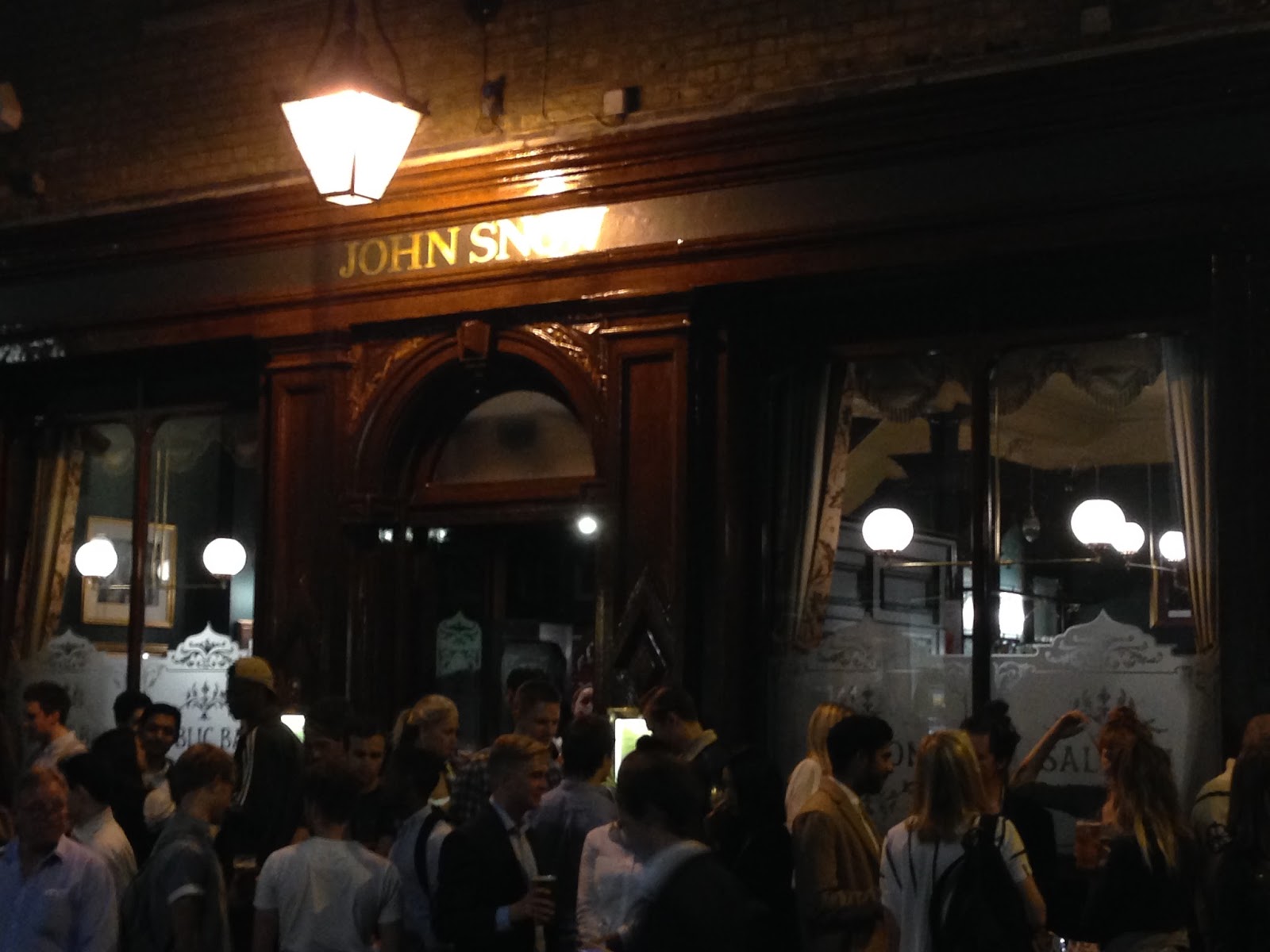
When I was in Europe I snapped as many photographs as I could of the beautiful sights and landscapes. The amount of castles, stone circles, ruins, and glens makes it very easy to find inspiration for stories (I also recommend a small notebook to write down such ideas before they float away). Some of the places I visited no doubt inspired other writers. For example, below are two pictures of a bar that I walked past while in London. Fans of A Song of Ice and Fire (Game of Thrones) will recognize the name. I have no idea if George R.R. Martin ever saw this particular bar, or was inspired by the name, but I know he has frequented the UK so perhaps there is a link. (Again, I suck at taking pictures. My wife Julia is much better at it. But I can at least claim that it was raining, it was dark, and I was buzzed on some solid English beer.)


London is full of amazing places. No doubt seeing some of these sites made me think of great writers before my time and how they must have done their own research. Sir Arthur Conan Doyle undoubtedly did research before writing his Sherlock stories. You can't see the address very well above the door, but we stopped by 221B Baker Street to see if we could catch a glimpse of Benedict Cumberbatch (I mean Sherlock Holmes...of course).  It was well past midnight and we did see a fox outside the house when we drove up....in downtown London. So perhaps Mr. Holmes was in disguise to avoid the American tourists. 


Edinburgh, Scotland was a magical city. I've heard stories that George R.R. Martin traveled quite a bit in England and Scotland (apparently Hadrian's Wall was the inspiration of The Wall in his books). While in Edinburgh we visit Edinburgh Castle, and inside the Grand Hall were numerous stained glass windows with the sigils and crests of Scottish clans and families. As you can see below, some of them are eerily familiar to those described in the books. Unfortunately, I neglected to take a picture of the castle up close. I'll scour Julia's phone when she gets home. 

Edinburgh Castle from across the city 

Inside the castle walls

Windows in the Grand Hall 


Of course, we also had to stop by a favorite haunt of J.K.Rowling - one of my most favorite authors. Julia was as excited as I was. However, the croissant I ate while there failed to unlock my inner muse and give me the inspiration to write a seven-book series that will make me a multi-millionaire. I should've asked for a refund. 


On the trip I was also excited to meet up with another author who is building up his own publishing company - Dark Chapter Press. Located in Alnwick, England, Rob is a horror author and his press has featured some of my own horror stories on the website. It was a great chance to meet after working online together for over a year. Here's to hoping for future collaboration with D.C.P.! (A short story of mine will be included in an upcoming horror anthology published by D.C.P.- more on that later.) 


Talking horror at Dirty Bottles with Rob (left) and Dark Chapter Press in Alnwick, UK


I'm continually surprised by the similarities in research, writing, and submission of either research publications or genre fiction writing. Hopefully I can use the success and failures I have in each field to improve my writing and story telling in the coming years. 

Next week (or at least next post) I will be conducting a social experiment of sorts over a period of several months. It's time that I put my genetics knowledge to an informative use and I plan on doing something a little crazy to garner more discussion and communication in genetics, especially with my friends who don't do research. 

Until then - Go Cubs! Back to the Future Part II predicted that the Cubs would be World Series winners this year. Wouldn't that be something if it really happened?